How the Coaching Process Works.
The Arenovas methodology is a five-stage process. It begins with a structured intake and ends with a documented session record. Each stage has a defined purpose and a fixed sequence — there are no shortcuts between steps.
The Five-Stage Process
Initial Consultation & Goal Setting
A 30-minute call or in-person meeting to discuss current activity levels, stated objectives, scheduling constraints, and available equipment. The outcome of this conversation is a written brief used to guide assessment design and programme structure.
No assumptions are carried from the consultation into subsequent stages. Each piece of information gathered is documented and referenced throughout the engagement.
Movement Screening & Body Composition Assessment
A systematic evaluation of functional movement patterns, observable asymmetries, and load tolerance characteristics. Seven standard movement screens are conducted. Findings are scored, documented, and used directly to shape the programme design in Stage 3.
Body composition is recorded at intake and revisited at each four-week check-in interval. The data provides a factual reference rather than a performance target.
Periodised Programme Design
A full periodised plan is written following the assessment. The plan is structured in four-week blocks with defined load progressions, active recovery intervals, and flexibility work integrated within each week's schedule. Where relevant, nutrition and lifestyle guidance is built into the weekly structure rather than offered as a separate layer.
Remote clients receive a written plan document. In-person clients work through sessions with the plan discussed verbally and confirmed in the session log at each meeting.
Session Delivery & Progress Logging
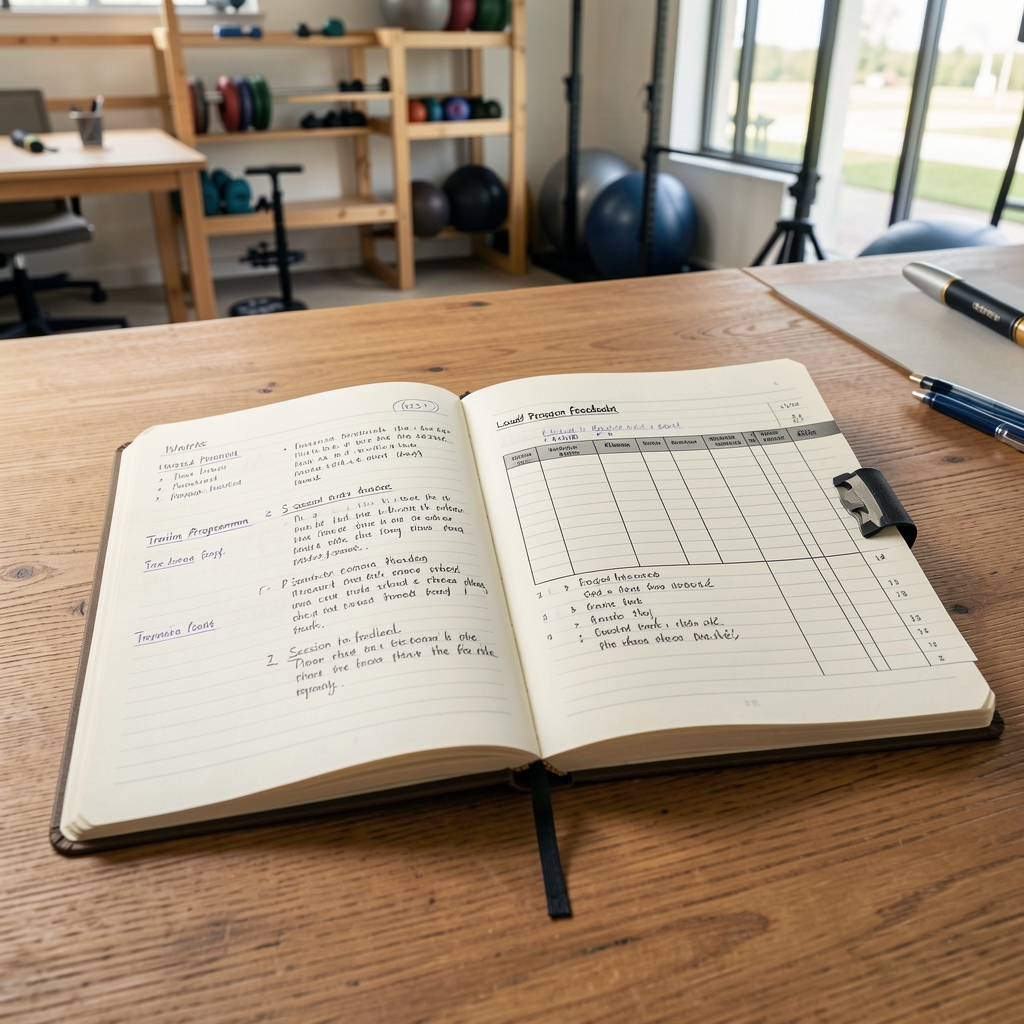
Each session is delivered according to the periodised plan. Deviations from the planned load or exercise selection — due to readiness, schedule changes, or observed feedback — are recorded in the session log. The log is the primary reference document for all subsequent programme decisions.
Remote clients submit their own session logs following each workout. Feedback is reviewed and responded to within 48 hours of submission.
Four-Week Check-In & Plan Review
At the end of each four-week block, a formal check-in is conducted. Session log data is reviewed, body composition is re-assessed where applicable, and the next programme block is adjusted based on documented outcomes. This is the point at which goal-setting parameters may be revised if context has changed.
The cycle then returns to Stage 3 for the next block. The check-in is not optional — it is the mechanism by which the programme stays calibrated to the individual rather than to a static template.

Programme Standards
Session Log Maintained for Every Engagement
A session log is opened at intake and maintained throughout the engagement. Logged data includes exercises, sets, loads, tempo, rest intervals, and session notes. The log is accessible to the client on request.
Active Recovery Built Into Every Block
Rest-day routines, sleep quality guidance, and active recovery sessions are scheduled as formal components of the programme — not afterthoughts. Their inclusion is based on the individual's documented load tolerance and schedule.
No Unannounced Programme Changes
Any change to a programme — whether a load adjustment, exercise substitution, or format change — is communicated explicitly and recorded in the session log. Changes made without acknowledgement from both coach and client are not part of the Arenovas standard.
Evidence-Informed Practice, Continuously Updated
Coaching practices at Arenovas are reviewed annually against published research in exercise science and movement assessment. Continuing education is an ongoing requirement, not a one-time credential. The aim is to keep practice current without chasing trends.
Single-Coach Accountability Across All Formats
Every Arenovas engagement — individual, group, or remote — is managed by the same qualified coach. There is no delegation to assistant coaches or substitution without advance communication. Consistency of coach is considered a core part of the programme structure.
Nutrition Guidance Referenced from Published Sources
Balanced meal guidance and hydration practices recommended as part of programmes are drawn from published nutritional research. Arenovas is an independent wellness resource focused on everyday nutrition and active lifestyle practices. The content is not affiliated with any governmental or institutional body.
Programme Verification
The Arenovas programme standard includes a periodic internal review process to ensure that coaching methods, client documentation, and published guidance remain consistent with each other.
Annual review cycles examine session log patterns, check-in data, and method documentation against current research and accreditation standards. Where inconsistencies are identified, the method document is updated before the next coaching block begins.
Coaching credentials are maintained through a recognised professional body with published recertification requirements. Certification documentation is available to clients on request.
Methodology Questions
A template programme applied to all clients regardless of movement history produces inconsistent outcomes. The screening identifies individual patterns that a written template cannot anticipate. It takes approximately 45 minutes and directly determines exercise selection, load parameters, and any movement priorities in the first training block.
Periodisation means the programme is organised into discrete, sequential blocks — typically four weeks each — where load, volume, and intensity are varied deliberately between blocks. It prevents stagnation and allows recovery to be built into the schedule structurally rather than reactively. Each block has a written objective that connects to the overall goal established in the intake consultation.
Yes. All session documentation is available to clients on request. In-person clients typically review logs together at each four-week check-in. Remote clients are sent a log summary along with the updated programme at the start of each new block.
Remote check-ins are conducted via a scheduled video call at the end of each four-week block. Prior to the call, the client submits their session log. The call covers log review, any feedback on the programme's feel and pacing, and the objectives for the next block. The updated plan is sent within two working days of the call.
The Process Starts with a Single Consultation.
Book a 30-minute initial consultation to discuss which programme format fits your current context and goals.
Book a Consultation